
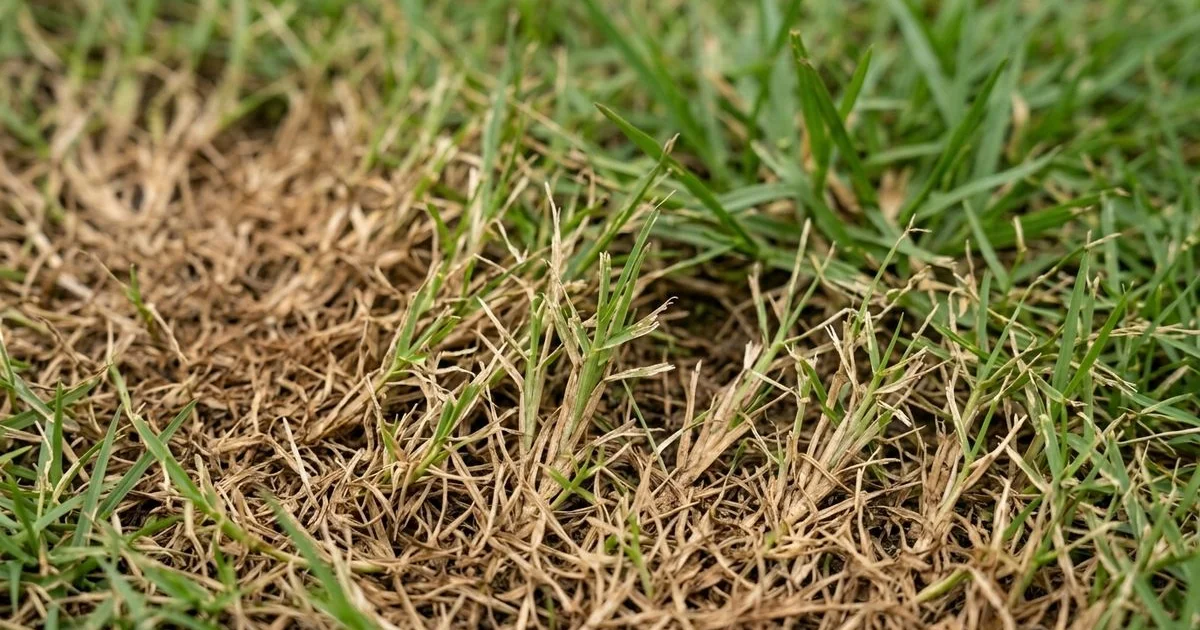
Two Pests, One Pattern: Fast-Moving Damage
Of all the things that go wrong with Klang Valley lawns, armyworms and lawn grubs cause the fastest visible destruction, and the most regret, because early signs are easy to dismiss until whole patches are dead. Knowing the signals below is what gets our pest treatment service called at the small-patch stage instead of the half-lawn stage.
Armyworms: The Surface Feeders
Armyworms are moth caterpillars that feed on grass blades in groups, the name comes from how they advance across a lawn like a front line. Signs to watch for:
- Chewed, ragged blade edges, often the first clue before any browning
- Brown patches that expand fast and irregularly, sometimes within days
- The caterpillars themselves, green-brown striped larvae, most active in early morning and late evening
- More moths than usual around the garden lights in the weeks before damage appears
Armyworm pressure rises in warm, wet stretches, the same monsoon months when grass grows fastest. A well-fed, lush lawn is unfortunately their favourite restaurant.
Lawn Grubs: The Root Eaters
Grubs are beetle larvae, plump, white, C-shaped, that live in the soil and eat grass roots from below. Because the damage happens underground, the lawn often looks merely “tired” until it’s severe. The signals:
- Turf that lifts like loose carpet. With the roots eaten, damaged grass pulls up with no resistance, the single most reliable grub sign.
- Birds digging at the lawn. Mynas and crows tearing at the turf have found the grubs before you did.
- Spongy patches that feel soft and loose underfoot.
- Browning that doesn’t respond to watering, because the problem isn’t moisture, the roots that would absorb it are gone.
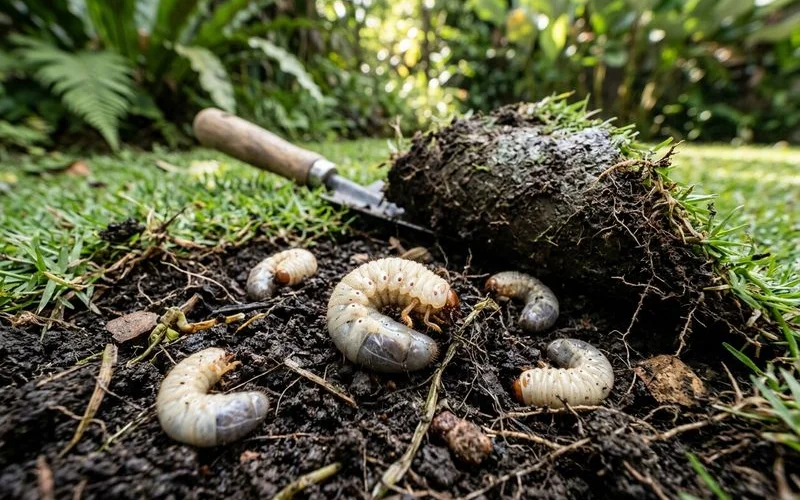
The thirty-second check
At the edge of a damaged patch, cut and lift a palm-sized flap of turf. White C-shaped larvae in the top few centimetres of soil confirms grubs. Nothing there? Work through the other causes in our guide to diagnosing brown patches.
Why DIY Treatment Usually Disappoints
The hardware-shop response, a general garden pesticide sprayed over the brown patches, fails for predictable reasons. Surface sprays don’t penetrate to root-feeding grubs. Armyworms feed at dawn and dusk, so a midday spray misses them. And every pest has life stages where treatment works well and stages where it barely works at all. Professional treatment is mostly about that knowledge: the right product, dosed correctly, reaching the right place at the right time, with safe re-entry guidance for your household afterwards.
When to Call It In
Speed is the whole game with these two pests. Call a professional when:
- Brown patches are visibly bigger than last week
- The tug test lifts rootless turf
- You can see caterpillars or grubs in the lawn
- A DIY treatment changed nothing within two weeks
Caught early, treatment is a single targeted visit plus a feeding plan for regrowth, and the lawn recovers within weeks, our guide on what a lawn pest treatment involves walks through the process and timeline. Caught late, you’re pricing returfing. If anything above sounds like your lawn this week, send us a photo on WhatsApp today rather than after the weekend, with armyworms especially, days matter.