What Are Dethatching and Aeration?
Selangor’s clay soil compacts easily, and a thick thatch layer blocks water and feed from reaching the roots, leaving grass spongy, patchy and slow to recover. Dethatching and aeration are the two foundation procedures that fix this from the ground up.
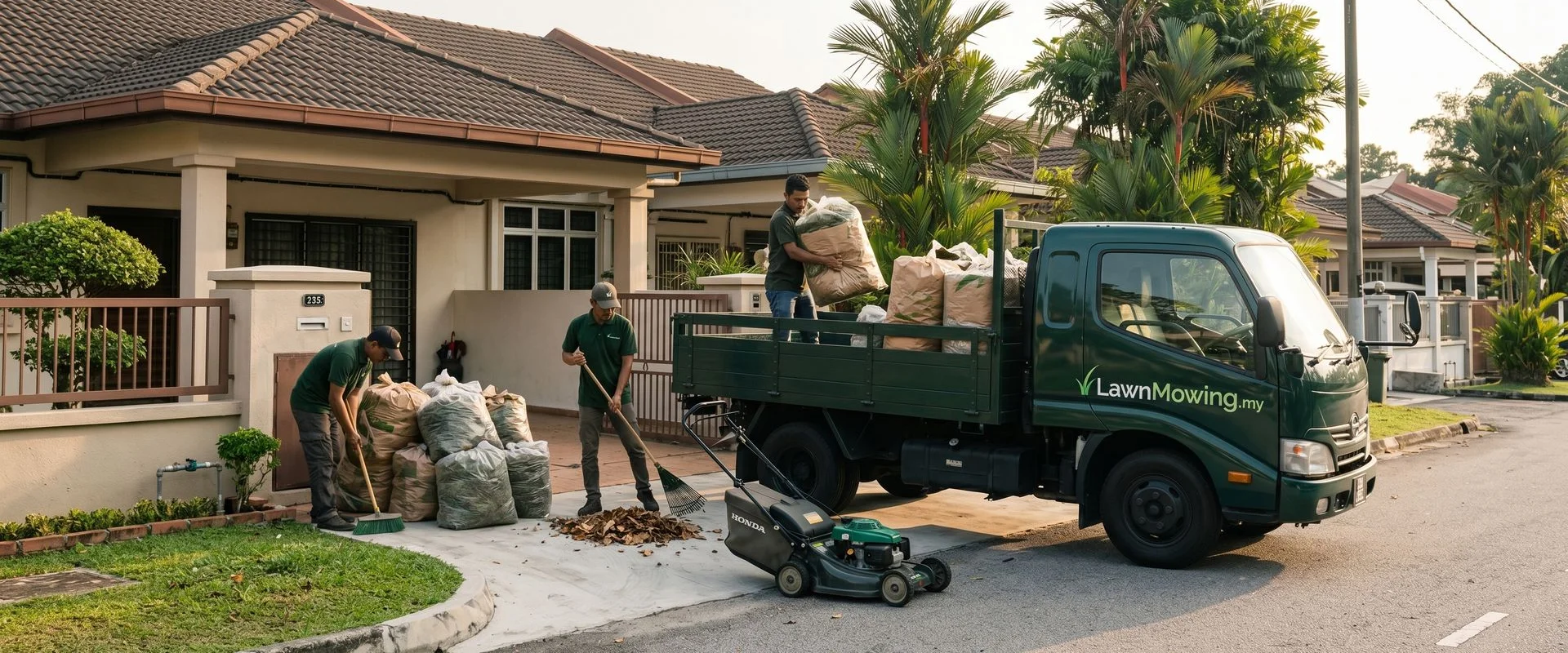
Dethatching removes the mat of dead stems and roots (the thatch layer) that builds up between the green grass and the soil. A thin layer is normal; past about a centimetre it acts like a raincoat, shedding water and trapping humidity that breeds fungus. We clear it with a dethatching rake on smaller lawns or a power rake on larger ones.
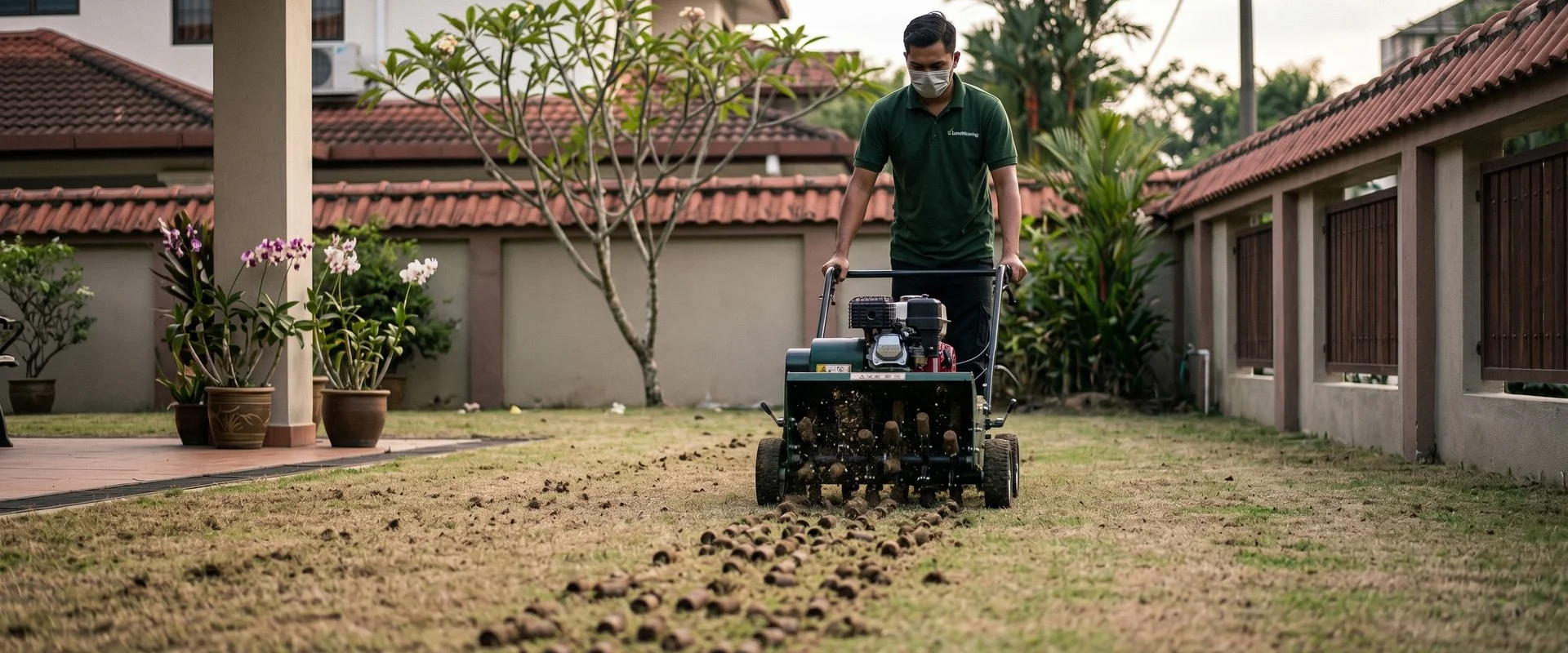
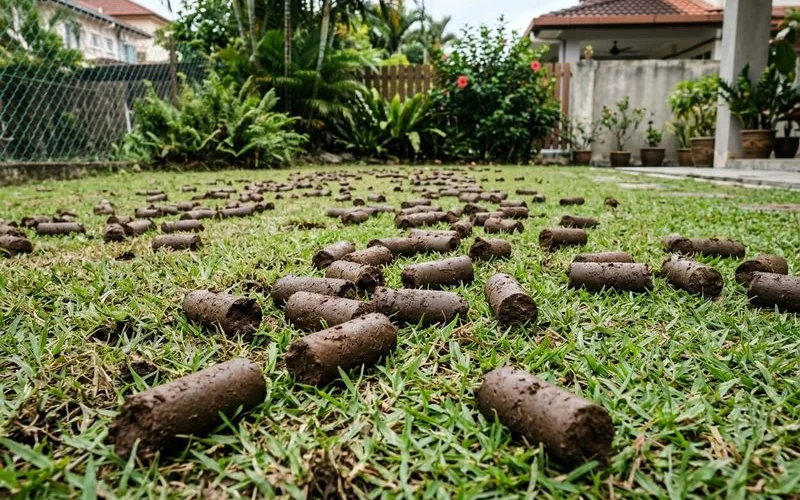
Aeration tackles the soil itself. A hollow-core mechanical aerator pulls thousands of small soil plugs from the lawn, while a spike aerator opens channels in lighter cases. Either way, the result is the same: water penetration improves, air reaches the roots, and root aeration restarts the biology that keeps grass healthy.
Why This Matters So Much on Selangor Clay
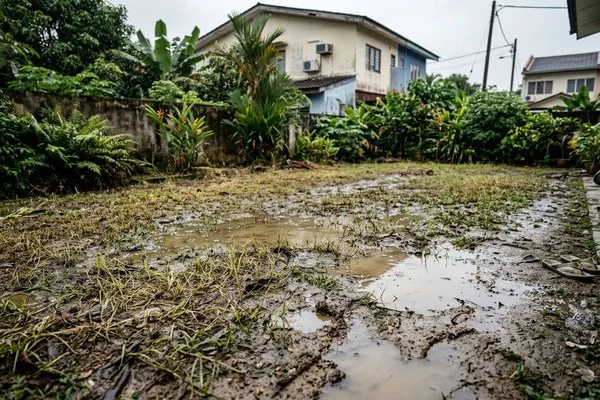
Clay is the defining fact of lawn care in the Klang Valley. It compacts under foot traffic, parked cars and even heavy rain, squeezing out the air pockets roots depend on. Once compacted, water runs off or pools instead of soaking in, fertiliser sits unused on the surface, and the grass thins out no matter how carefully it’s mowed and fed.
That’s why feeding a compacted lawn is throwing money away, and why we check compaction before recommending a feeding programme. Open the soil first, then feed: the same products suddenly work twice as well.
Dethatching vs Aeration: Which Does Your Lawn Need?
| Dethatching | Aeration | |
|---|---|---|
| Fixes | Spongy thatch layer above the soil | Compacted clay below the surface |
| Telltale sign | Turf feels springy, sheds water | Water pools, screwdriver won’t push into damp soil |
| Method | Dethatching rake or power rake | Hollow-core or spike aerator |
| Best follow-up | Mowing back to normal height | Top-dressing and a feed |
Many PJ lawns need both, the inspection on the first visit tells us which order to do them in.
Common Problems We Solve
Spongy, Springy Turf
A thick thatch layer holding moisture above the soil. Dethatching clears it, and the lawn firms up and drains again.
Water Pooling After Every Downpour
Compacted clay shedding rain instead of absorbing it. Core aeration restores penetration, important in the monsoon, when pooling water also breeds mosquitoes.
A Lawn That Ignores Fertiliser
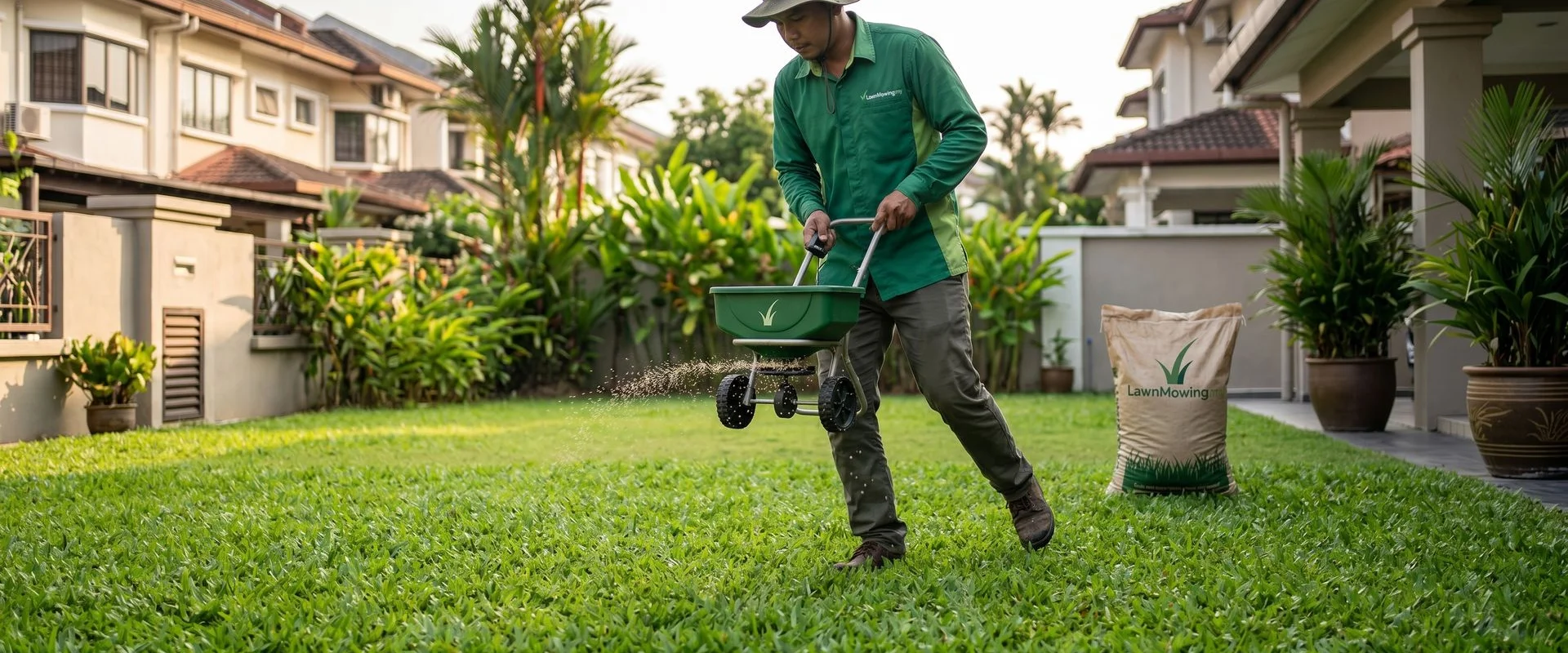
If feed can’t reach the roots, it can’t work. Aeration opens the path; feeding afterwards completes the recovery.
Thin Grass on a Once-Good Lawn
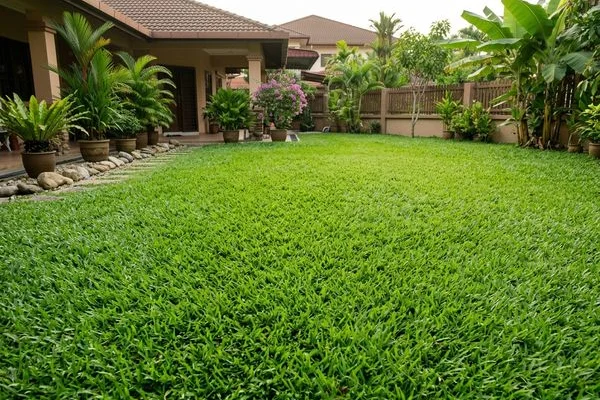
Years of gradual compaction slowly suffocate even a well-established lawn. An annual aeration cycle, with organic compost top-dressing soil worked in, reverses the decline and improves the clay a little more each year. Combined with regular lawn mowing in Petaling Jaya on a recurring schedule, it keeps an older lawn performing like a new one.
The Follow-On: Top-Dressing and Feeding
After aeration we recommend top-dressing with a compost or sand mix for badly compacted lawns. The mix settles into the core holes, builds better soil structure and feeds microbial activity, a permanent improvement, not just a seasonal one. Paired with a feeding programme, it’s the full recovery package for a struggling lawn, and it’s why dethatching and aeration sit at the foundation of everything else we do.