
Two Hidden Problems, One Set of Symptoms
When a lawn underperforms despite regular cutting and feeding, the cause is usually under the surface, and on Klang Valley lawns it’s nearly always one of two things. Thatch: a mat of dead stems and roots built up between the grass and the soil. Compaction: the soil itself squeezed dense and airless, a speciality of Selangor clay. They produce overlapping symptoms, and our dethatching and aeration service exists to fix exactly this pair.
Here are the signs, and the checks that tell you which one you’ve got.
Sign 1: The Lawn Feels Spongy
Walk the lawn. If it feels springy, like walking on a thin mattress, that’s thatch, a dead layer thick enough to compress underfoot. A little thatch is normal and even protective; past about a centimetre it becomes a raincoat over the soil, shedding water, blocking feed, and holding the trapped humidity that fungus loves.
Check it: cut a small wedge of turf and look at the cross-section. The brown, fibrous band between green growth and soil is the thatch. Over a finger-width: time to dethatch.
Sign 2: Water Pools After Rain
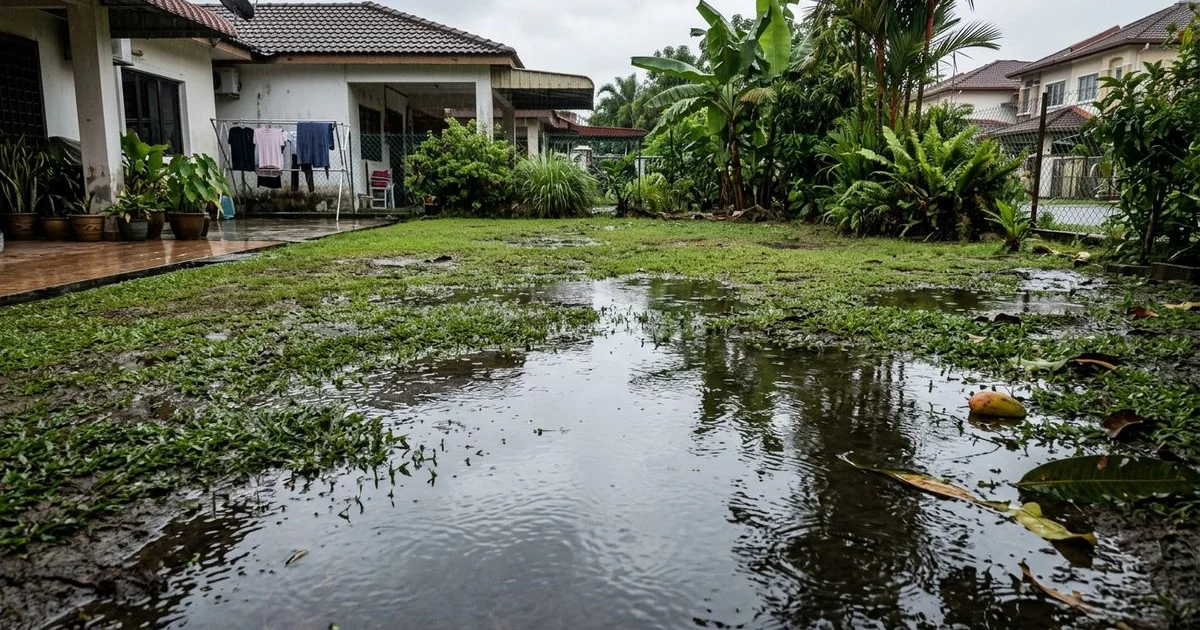
Puddles that sit on the lawn for hours after a storm mean water isn’t penetrating, and on PJ lawns that’s compaction first, thatch second. Beyond looking bad, those puddles drown roots, breed mosquitoes, and create the warm-wet conditions for brown patch disease.
Check it: the screwdriver test. Push a screwdriver into damp soil; if it resists hard, the ground is compacted. Compare a pooling spot against a healthy corner and you’ll feel the difference immediately. Why clay does this so aggressively is covered in our guide to Selangor clay compaction.
Sign 3: Feeding Stopped Working
A lawn that shrugs off fertiliser is the classic compaction tell. The feed is fine, it just can’t get to the roots through a sealed soil surface or a thatch raincoat. If your lawn greened up after feeds two years ago and barely responds now, suspect the soil before blaming the product.
Sign 4: Thin Grass and Shallow Roots
Compacted soil gives roots nowhere to go, so they stay shallow, and shallow-rooted grass thins out, browns quickly in dry spells, and pulls up too easily. If a gentle tug lifts turf with only a fingernail of root underneath (and there are no grubs in the soil), compaction is starving the root zone.
Thatch or compaction? Often both.
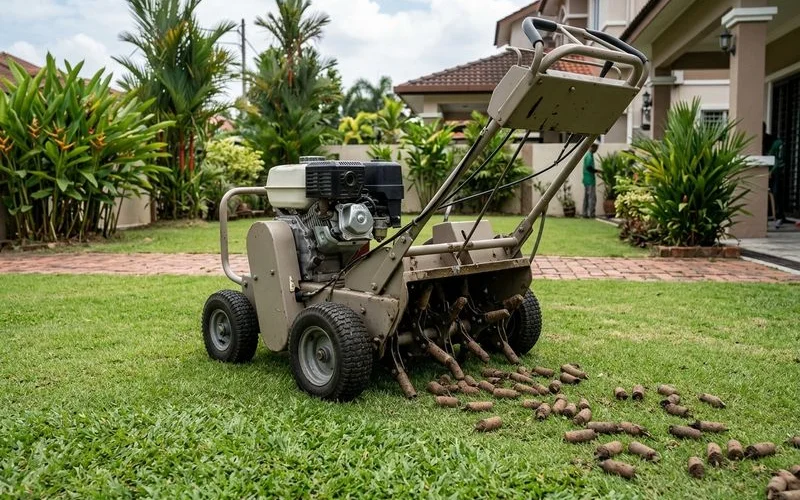
The two problems feed each other: compacted soil slows the biology that breaks thatch down, and heavy thatch keeps the soil beneath it airless. Most struggling PJ lawns we assess need dethatching and aeration together, which is why we treat them as one job.
What Each Procedure Fixes
| Symptom | Dethatching fixes | Aeration fixes |
|---|---|---|
| Spongy feel | Yes | - |
| Water pooling | Partly | Yes |
| Feed not working | If thatch blocks it | If soil blocks it |
| Thin, shallow-rooted grass | Partly | Yes |
| Fungus-prone dampness | Yes | Yes |
Run the Checks, Then Get a Second Opinion Free
Five minutes with a screwdriver and a cut wedge of turf will tell you most of the story. If the signs point underground, send us your findings (and a photo or two) on WhatsApp, we’ll confirm whether your lawn needs dethatching, aeration or both, and quote the job free. Done once a year, it’s the foundation that makes every other part of lawn care actually work.