What Is a Lawn Feeding Programme?
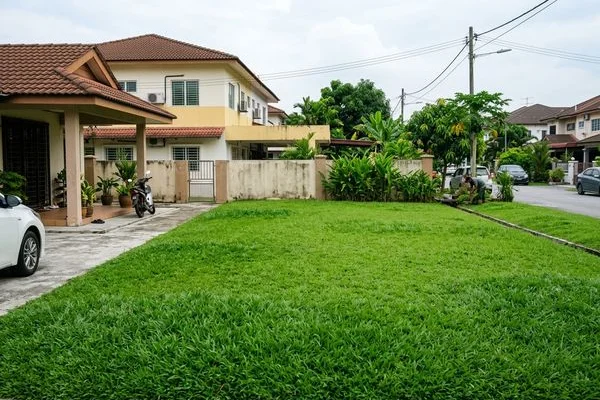
A dense, deep-green lawn comes from the right feeding, not just regular cutting. Grass is a living crop: it uses up the nutrients in the soil, and on Selangor clay soil those nutrients run out faster than most owners expect. A feeding programme replaces them on a schedule, using an NPK ratio (Nitrogen, Phosphorus, Potassium) matched to your grass and the season.
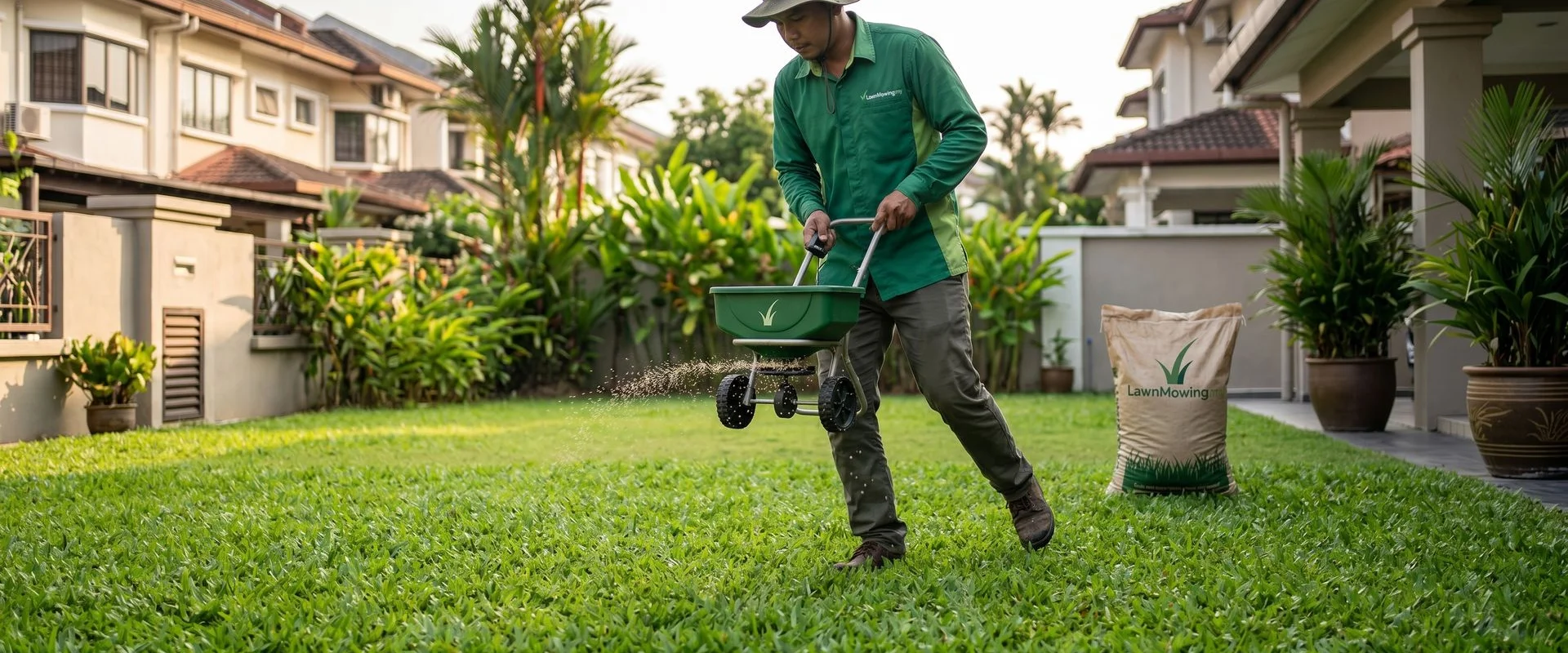
We run feeding programmes built around Malaysian grass types and Selangor’s monsoon growth cycles. Slow-release granules spread with a broadcast fertiliser spreader give cow grass (Axonopus compressus) and carpet grass a steady supply of nutrients, while foliar fertiliser gives a faster lift when a lawn needs quick recovery. Feeding pairs naturally with our recurring lawn mowing plans in Petaling Jaya for a lawn that simply looks after itself.
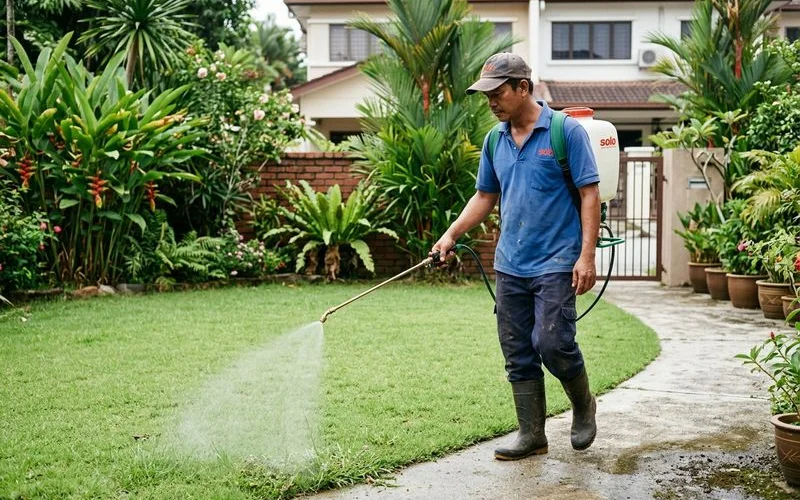
Weed control is the other half of the job. A hungry, thin lawn is an open invitation to broadleaf weeds, goosegrass (rumput sambau) and crabgrass. We spot-treat what’s already there with post-emergent selective herbicide, use pre-emergent herbicide where weed pressure is heavy, and let the thickening grass crowd out the rest.
Why Petaling Jaya Lawns Go Pale and Weedy
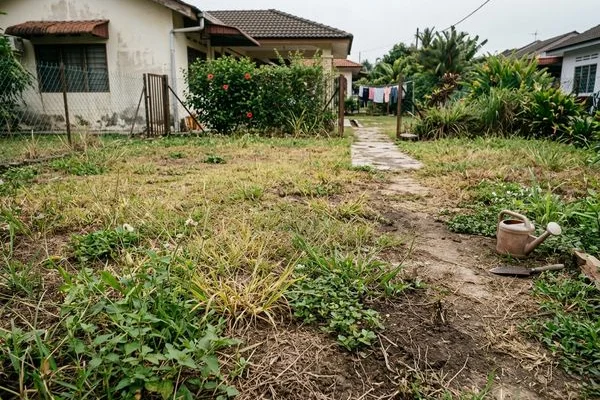
PJ’s combination of heavy clay soil, intense sun and monsoon downpours is hard on lawns. Clay holds nutrients tightly and compacts easily, so roots struggle to reach feed. Monsoon rain then leaches nitrogen out of the topsoil exactly when the grass is trying to grow fastest. The result is a familiar pattern: a lawn that looks fine in photos from two years ago but is now pale, thin in patches, and slowly filling with weeds. Our pre-monsoon lawn checklist covers how we time feeding around the wet season.
Casual cutters don’t fix this because cutting alone can’t. Mowing controls height; feeding controls health. The two together, plus weed control before invaders get established, is what keeps a Malaysian lawn dense and deep green year round.
DIY Feeding vs a Managed Programme
| DIY bag-and-spread | General gardener | LawnMowing.my programme | |
|---|---|---|---|
| Product choice | Whatever the shop stocks | Usually one generic feed | NPK matched to grass type and season |
| Application rate | Hand-flung, easy to burn | Rarely measured | Measured rates with a broadcast spreader |
| Timing | When you remember | When they visit | Scheduled around monsoon growth cycles |
| Weed control | Separate purchase, often non-selective | Seldom included | Selective spot treatment included |
| Follow-up | None | None | Lawn response tracked visit to visit |
Common Problems We Solve
Pale, Yellowing Grass
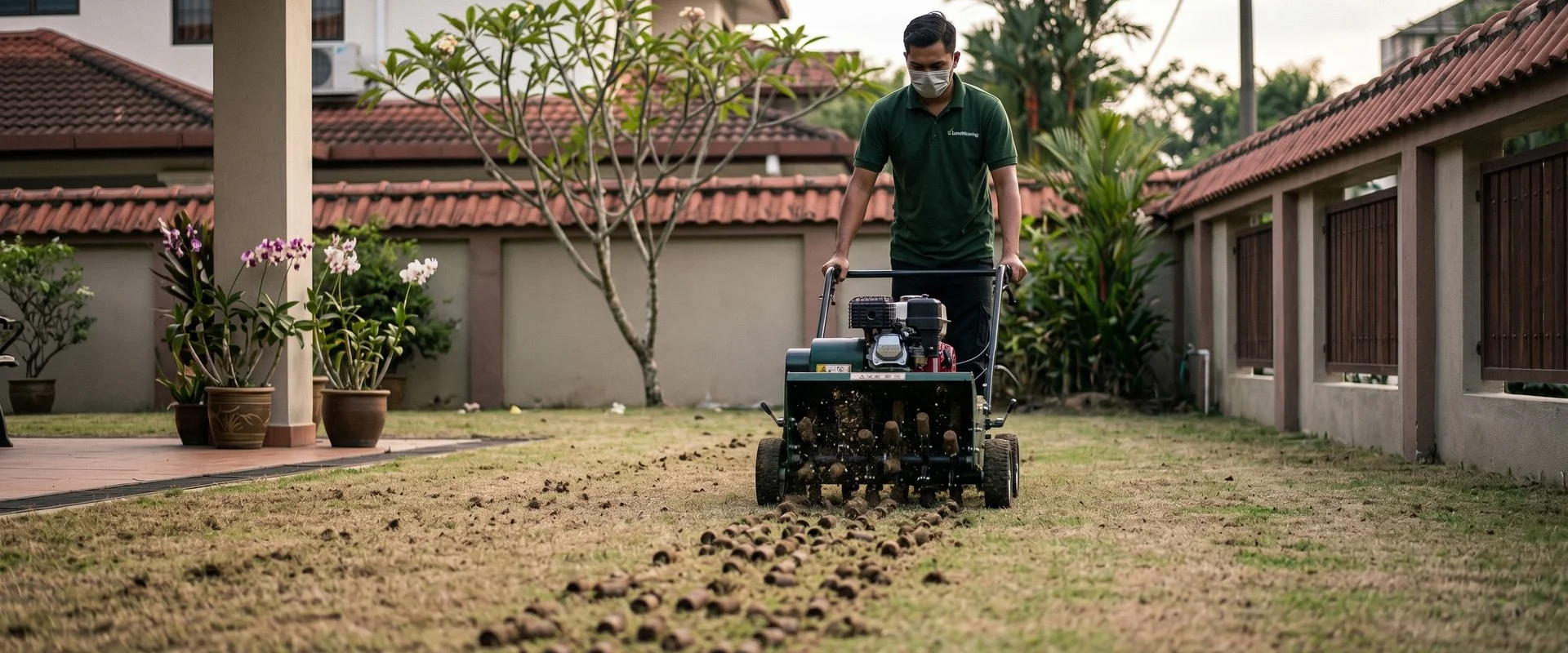
Usually nitrogen hunger, sometimes made worse by compacted soil. A measured NPK feed brings the colour back within weeks, and we check compaction so the fix lasts.
Goosegrass and Crabgrass Taking Over
These tough grassy weeds spread fast in thin lawns. Selective treatment knocks them down, and a feeding programme thickens the lawn so they can’t re-establish.
Bare Patches That Never Fill In
Feeding pushes healthy grass to creep across bare spots. Where patches persist, we look for the underlying cause, compaction, grubs or fungus, and treat that first.
Lawns That Burn After DIY Fertilising
Too much nitrogen scorches grass, and it’s an easy mistake with hand-spreading. We apply measured rates with proper equipment, so the lawn gets fed, not burned.
What’s Included in Every Feeding Visit
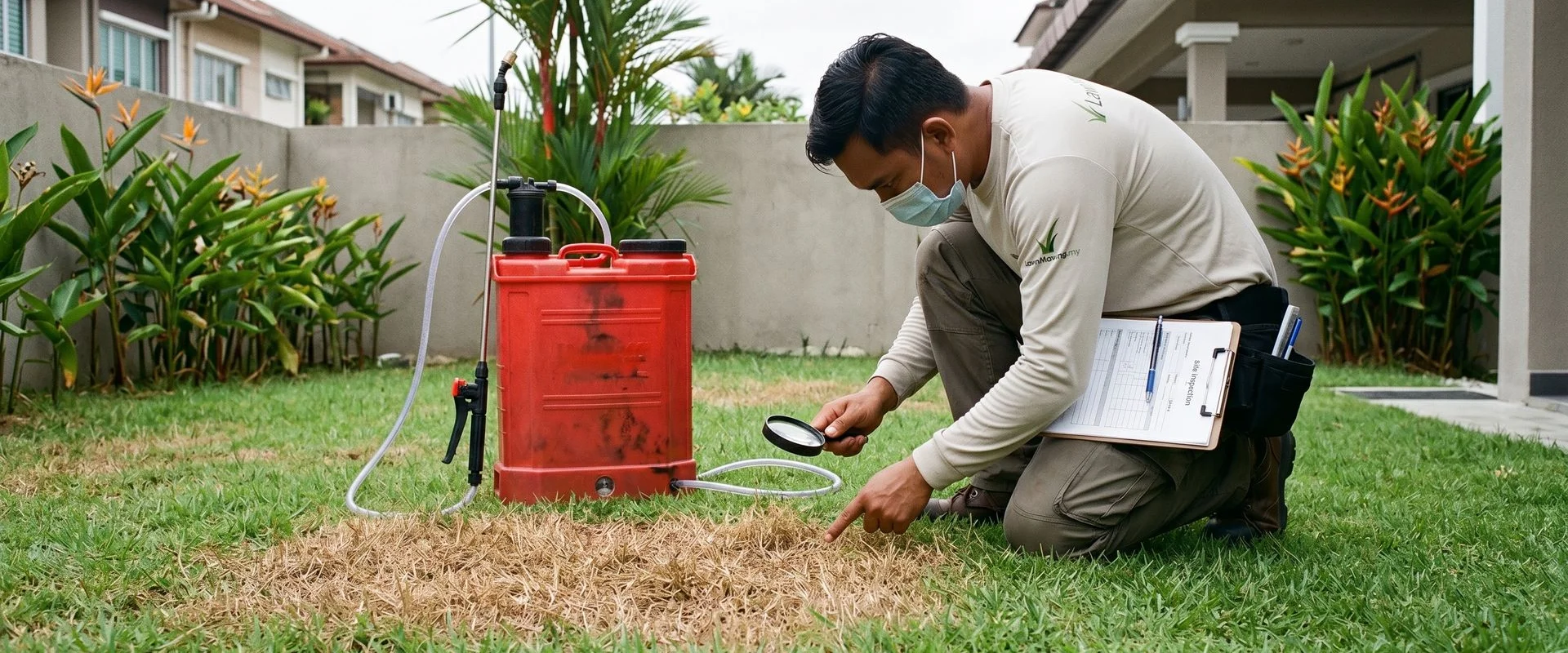
Every visit starts with a quick read of the lawn: colour, density, weed pressure and how it has responded since last time. Then we apply the right product at the right rate, granular feed through the spreader for steady nutrition, foliar feed for fast correction, and targeted weed treatment where needed. You get clear notes on what was applied and any re-entry timing for pets and children.
If you’re on a recurring mowing plan, feeding visits are coordinated with your cuts so the lawn is always in the right state for each step. That’s the practical advantage of one crew handling both: the feeding supports the mowing, and the mowing schedule protects the feeding.