
Know Your Enemy: The Weeds on Malaysian Lawns
Every weedy lawn in the Klang Valley is hosting some mix of the same few invaders. Learning to recognise them matters because they’re not controlled the same way, and because the long-term cure is the same for all of them: the dense, healthy turf that our weed control service is designed to restore.
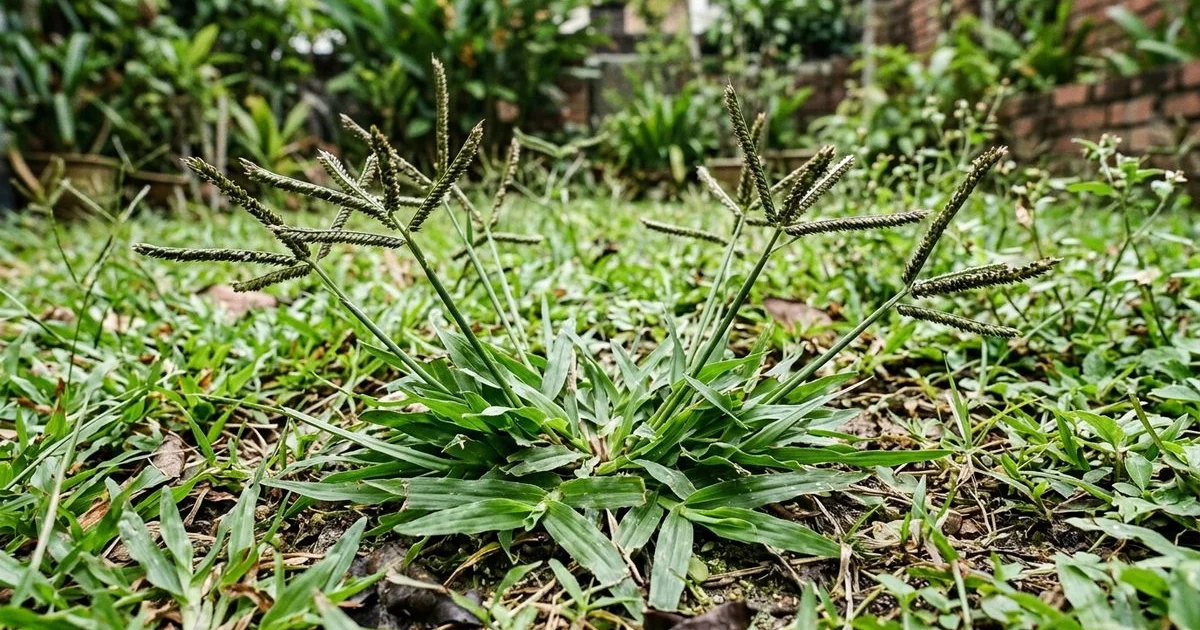
Goosegrass (Rumput Sambau)
The toughest customer on the list. Goosegrass grows in a flat rosette with stems that radiate from a silvery-white centre, hugging the ground below mower height. It loves compacted, hard-worn ground, gate entrances, play areas, the strip where the car overhangs the lawn, which is why it’s often the first weed to appear and the last to leave. Hand-pulling rarely gets the full root, and it regrows from fragments. Effective control combines post-emergent treatment with fixing the compaction that invited it.
Crabgrass
Crabgrass sprawls in a star pattern, rooting at the stem joints as it spreads, one plant can colonise a dinner-plate-sized area in weeks. It germinates explosively when soil is warm, moist and receiving sunlight, which means a thin lawn after the monsoon is prime crabgrass real estate. Pre-emergent herbicide ahead of its germination window stops it before it starts; established plants need post-emergent treatment.
Broadleaf Weeds
Everything with leaves that obviously aren’t grass: sensitive plant (mimosa, with its tiny thorns that find bare feet), various creeping daisies and spurges, and the assorted rosette weeds that pop up after rain. Individually minor, collectively they fragment a lawn’s surface. The upside: broadleaf weeds are the easiest to control selectively, since herbicides can distinguish them from grass cleanly.
How Selective Weed Control Works
The tools split into two families:
Pre-emergent herbicide forms a barrier in the topsoil that stops weed seeds establishing. It’s preventive, applied before the germination flush, typically ahead of the wet season, it dramatically cuts the number of new weeds that ever appear.
Post-emergent selective herbicide kills weeds that are already growing, while leaving the lawn grass unharmed. Selectivity comes from chemistry and dose: products and rates chosen for cow grass and carpet grass knock down the invaders without touching the turf. This is precision work, the wrong product or a heavy hand is how DIY weed control ends up killing patches of lawn along with the weeds.
Spot treatment beats blanket spraying
A healthy lawn with a few weeds needs millilitres of product on the weeds themselves, not litres across the whole garden. Less chemical, same result, no stressed grass.
The Permanent Fix Is Density
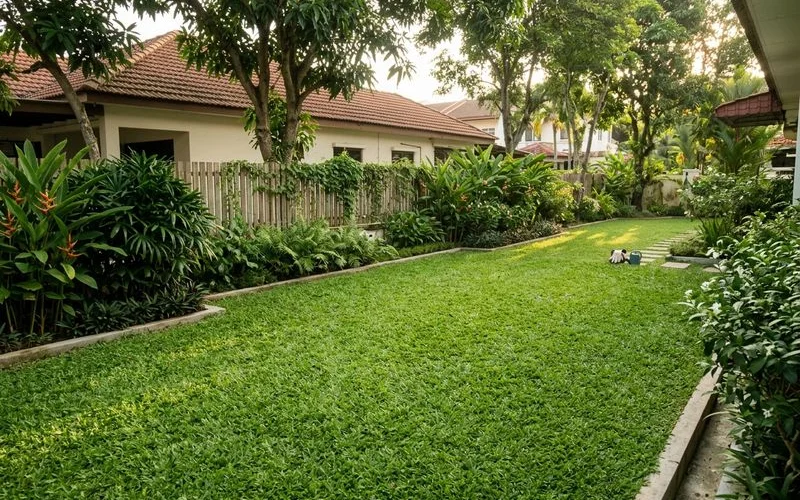
Here’s the part most weed-control advice skips: herbicide clears weeds, but only dense grass keeps them out. Weeds are opportunists, they establish in gaps, thin patches and bare soil. A lawn cut at the right height and fed properly closes those gaps, and weed pressure drops to almost nothing.
That’s why our weed treatments are paired with feeding rather than sold alone, clearing invaders and then leaving the lawn thin just schedules the next invasion. See feeding for denser grass for how the nutrition side works.
If your lawn is more weed than grass at this point, don’t despair, that’s a recovery project, not a lost cause. Send us a photo on WhatsApp and we’ll map out the treatment-plus-feeding sequence to bring it back.