
NPK, Decoded for Lawn Owners
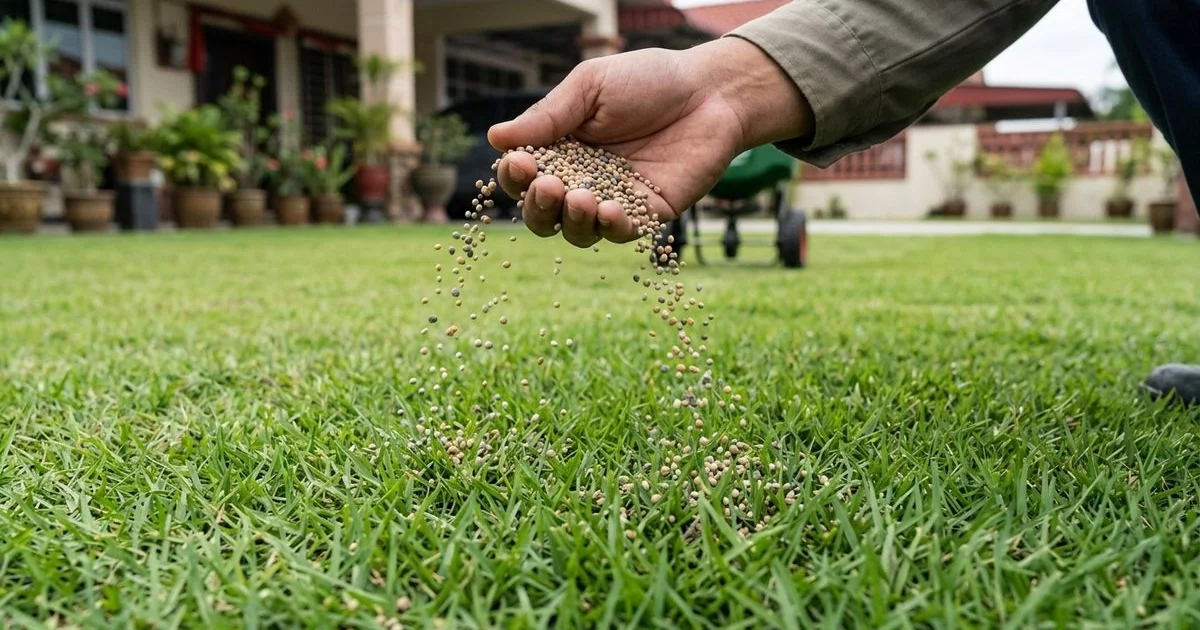
Every fertiliser bag carries three numbers, something like 15-15-15 or 25-7-7. That’s the NPK ratio: the percentages of Nitrogen (N), Phosphorus (P) and Potassium (K) inside. Understanding what each does is most of what you need to make sense of lawn feeding, and it’s the foundation of our lawn fertilising service in Petaling Jaya.
Nitrogen (N) drives leaf growth and colour. It’s why a fed lawn turns that deep, dense green within weeks. It’s also the nutrient tropical rain washes away fastest, so it needs replacing most often.
Phosphorus (P) builds roots. New lawns, recovering lawns and freshly aerated lawns benefit most; established healthy turf needs comparatively little.
Potassium (K) is the resilience nutrient. It strengthens cell walls, helping grass cope with heat stress, disease pressure and heavy foot traffic, all standard conditions on a Malaysian lawn.
What Cow Grass and Carpet Grass Actually Want
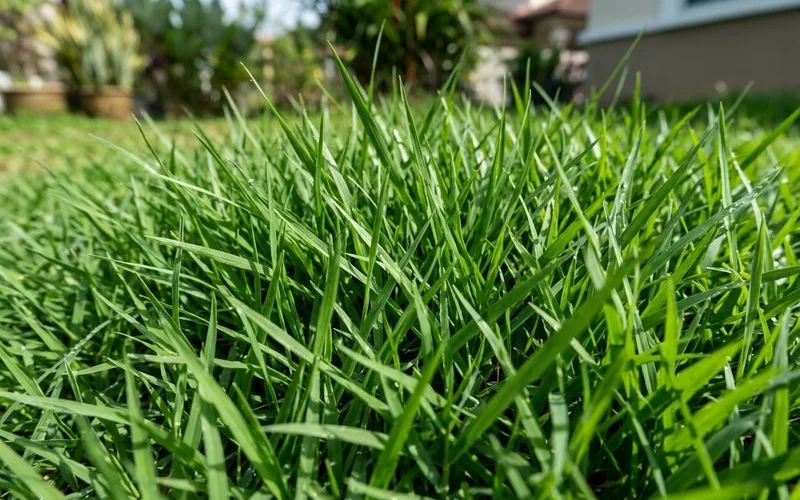
The good news: Malaysia’s common lawn grasses aren’t fussy. Cow grass and carpet grass respond well to a nitrogen-leaning feed during the growing season, that’s what produces the colour and density people want, with balanced applications a few times a year to cover P and K. The challenge isn’t choosing an exotic product; it’s applying the right amount at the right time on soil that fights you.
Selangor clay holds nutrients tightly but drains poorly, and monsoon rain leaches nitrogen from the topsoil exactly when grass grows fastest. That’s why timing beats brand: a moderate feed applied before a growth period outperforms a heavy feed dumped mid-downpour.
The burn warning
More fertiliser is not more green. Over-applied nitrogen scorches grass, leaving brown stripes that take weeks to recover. If you DIY, always use a spreader and follow the bag rate, never hand-fling granules onto a lawn.
Slow-Release Granules vs Foliar Feeding
Slow-release granules are the backbone of tropical lawn feeding. Coated granules, products like YaraMila are a familiar local example, release nutrients over weeks rather than days, which suits a climate where heavy rain would flush a fast-release product straight through. Spread with a broadcast spreader, they feed the lawn steadily between visits.
Foliar fertiliser is liquid feed sprayed onto the leaf, absorbed within days. It’s the recovery tool: a quick green-up for a pale lawn, support for turf recovering from pest damage, or a boost where roots are compromised. It doesn’t last, so it complements granular feeding rather than replacing it.
Organic options, composted manures, organic granules, release slowly and improve clay soil structure as they break down. They’re slower to show results but pay off long-term, especially on PJ’s compacted soils.
| Feed type | Speed | Duration | Best for |
|---|---|---|---|
| Slow-release granular | Weeks | 6-10 weeks | The regular programme |
| Foliar (liquid) | Days | Short | Quick recovery, pale lawns |
| Organic | Slow | Long | Soil improvement on clay |
Feeding Is a Programme, Not an Event
A single feed gives a single result: a few good weeks, then a slow fade. What keeps a lawn permanently green is a programme, applications timed across the year to match growth cycles, adjusted to how the lawn responds. We’ve covered the scheduling side in our guide to how often to feed.
That’s also the practical case for having feeding handled professionally: the products are ordinary, but the judgement, what ratio, what rate, what timing, and what’s actually wrong when a lawn won’t respond, is where eight years of local lawns makes the difference. On a recurring plan, feeding simply happens alongside your mowing visits, and the lawn stays the colour you hired it to be.