
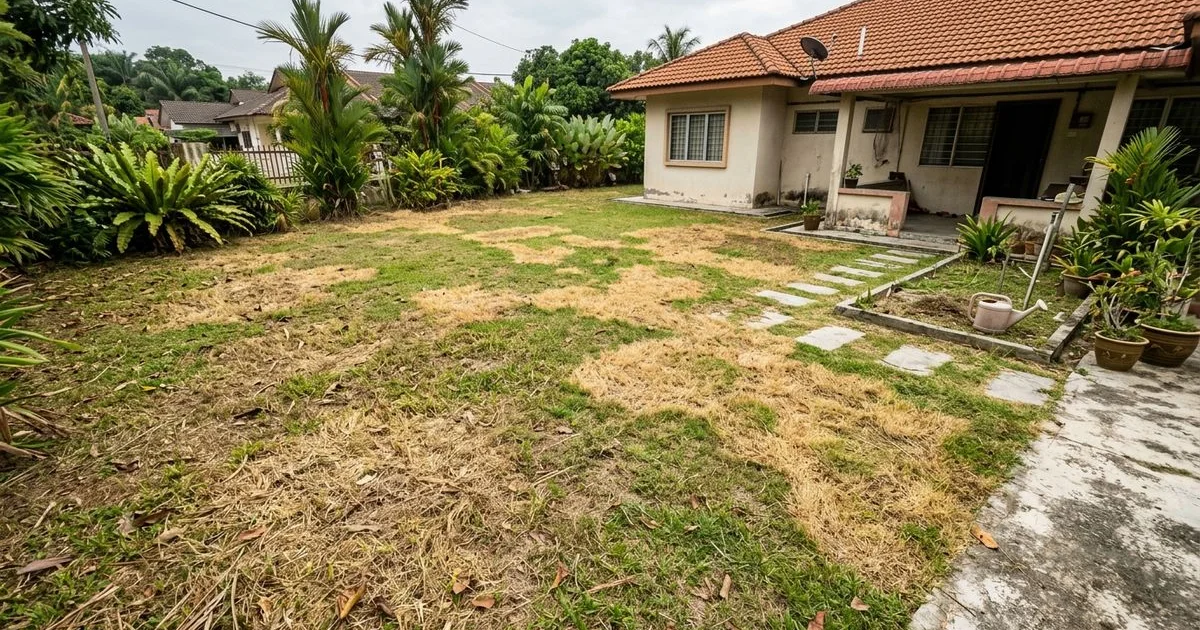
Patches Are a Symptom, Not a Diagnosis
A yellow or brown patch on your lawn is the grass telling you something is wrong in that spot. The frustrating part: at least four different problems produce nearly identical patches, and three of the common DIY responses, water more, feed more, spray something general, each fix only one of them. Getting lawn feeding and weed control decisions right starts with reading the patch correctly.
Here’s how we tell the causes apart on Selangor lawns, and how you can run the same checks yourself.
The Four Usual Suspects
1. Poor drainage and root rot. Selangor clay compacts, water pools, and grass roots sitting in waterlogged soil suffocate and rot. The patches appear in the lawn’s low spots, feel soggy underfoot a day after rain, and the yellowing develops gradually.
2. Fungal disease (brown patch). Humid weather plus damp, thatchy grass breeds fungus. The classic sign is shape: roughly circular patches, sometimes with a darker ring at the edge, expanding in the monsoon months. We’ve written a full guide to fungal brown patch and its treatment.
3. Pests, grubs and armyworms. Pest damage moves fast and irregularly. Grub-eaten turf lifts like loose carpet because the roots are gone; armyworm patches expand visibly week to week and you may spot chewed blades or birds digging.
4. Nutrient deficiency. A hungry lawn yellows, but usually evenly, or in the zones missed during the last feed. Sharp-edged pale stripes are the giveaway of uneven spreading, not disease. Our guide to NPK fertiliser for Malaysian grass explains what a hungry lawn actually needs.
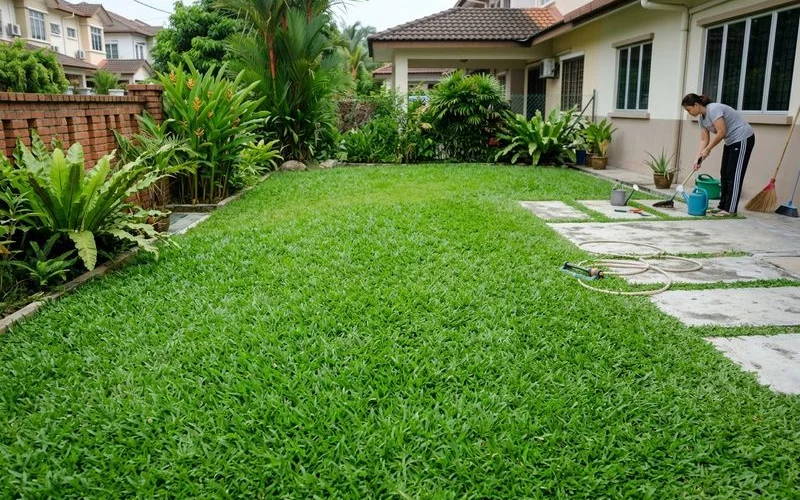
Five-Minute Checks You Can Do at Home
Run these before buying anything
Ten minutes of checking saves weeks of treating the wrong problem.
- The tug test. Grab a handful of grass at the patch edge and pull gently. If the turf lifts with no resistance, roots are gone, think grubs or root rot.
- The dig test. Lift a palm-sized flap of turf at the patch edge. White, C-shaped larvae underneath means grubs. Healthy white roots means look elsewhere.
- The shape test. Circular patches with defined edges lean fungal. Irregular, fast-moving patches lean pests. Low-spot patches lean drainage.
- The squelch test. Walk the patch a day after rain. Soggy ground in those spots points to drainage and compaction.
- The pattern test. Pale stripes or zones matching how the lawn was last fed point to uneven application, not disease.
Matching the Fix to the Cause
| Cause | The fix |
|---|---|
| Drainage / root rot | Aeration to open the clay, fix low spots, reduce watering |
| Fungal brown patch | Fungicide treatment plus drainage and mowing corrections |
| Grubs / armyworms | Targeted pest treatment, then feeding for regrowth |
| Nutrient deficiency | Measured NPK feeding with a proper spreader |
Notice that watering harder isn’t on the list anywhere, and for fungus and drainage problems it actively makes things worse. That’s the most common way well-intentioned owners turn a small patch into a big one.
When to Call It In
If the patches are spreading week to week, if the tug test pulls up rootless turf, or if you’ve treated once and seen no change, it’s time for a professional look. Spreading damage means an active cause, pests or disease, and every week of the wrong treatment costs more grass.
Our inspection covers all four causes in one visit: we read the damage, confirm with the soil, treat what’s actually there, and set up the feeding and mowing plan that regrows the patches. Send a photo of your lawn on WhatsApp and we’ll usually tell you which suspect we’re betting on before we even arrive.