
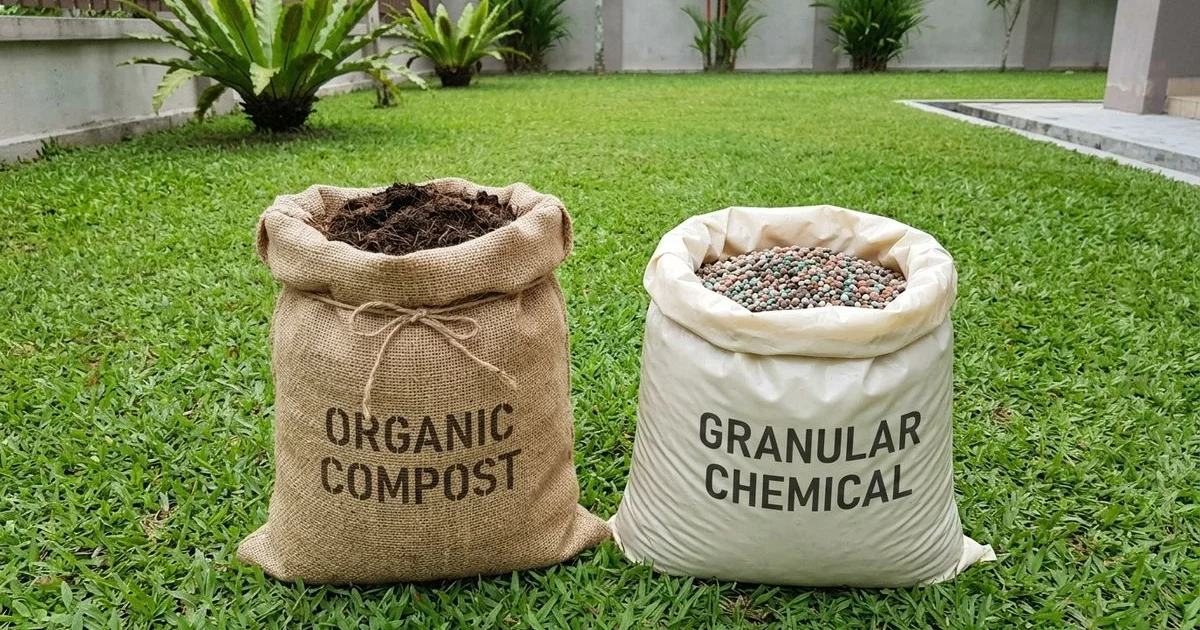
Two Philosophies, One Goal
Walk into any nursery and the lawn feed shelf splits in two. On one side, synthetic (chemical) fertilisers: engineered granules with exact NPK numbers. On the other, organics: composted manures, bone and seaweed meals, pelleted plant matter. Both feed grass; they just take different routes, and the right choice for our fertilising service clients usually turns out to be “some of each.”
The Case for Synthetic Fertiliser
Precision and speed. A synthetic feed delivers a known NPK ratio at a known release rate, if the lawn needs nitrogen, you can supply exactly that, and see the response within two to three weeks. (For what those letters do, see what NPK your grass needs.)
Predictability in the tropics. Coated slow-release granules are built for climates like ours: they meter out nutrients over weeks, riding through downpours that would flush cruder products away.
Cost per result. For pure greening power per ringgit, synthetics win.
The limits: synthetics feed the grass but do nothing for the soil. Used alone for years on compacted Selangor clay, you get a lawn that’s green but fragile, dependent on the next feed because the soil beneath contributes little.
The Case for Organic Fertiliser
Soil building. Organics feed the soil’s microbial life, and that biology gradually improves clay structure, better drainage, better root penetration, more natural fertility. On PJ’s compacted soils this is the long game worth playing.
Gentle by nature. Organic feeds release slowly and are nearly impossible to burn a lawn with, which makes them forgiving.
Comfort factor. Many families simply feel easier about composted, natural inputs where children and pets play daily.
The limits: results come slowly, NPK content is lower and less precise per kilogram, and a badly faded lawn won’t get its quick rescue from organics alone.

Safety Around Pets and Children
The honest answer on safety: application practice matters more than the organic/synthetic label. Properly applied synthetic granules, watered in, with the lawn dry before re-entry, present minimal risk, and we state a clear re-entry window after every application. Organics are gentler still, though fresh manure-based products have their own hygiene window for dogs that like to dig and taste.
What’s genuinely unsafe is careless application: over-spread granules sitting on paths, product applied at triple rate by hand, no re-entry guidance at all. That’s an applicator problem, not a chemistry problem.
Side by Side
| Synthetic | Organic | |
|---|---|---|
| Speed of greening | 2-3 weeks | 4-8 weeks |
| NPK precision | Exact | Approximate |
| Soil improvement | None | Significant over time |
| Burn risk if misused | Real | Minimal |
| Pet/child comfort | Safe with re-entry window | Gentlest option |
| Best role | Correcting and maintaining colour | Building clay soil long-term |
What We Actually Use
On most PJ lawns, a blend: slow-release synthetic granules as the programme’s backbone for reliable, season-timed nutrition, with organic inputs layered in where soil needs building, typically after aeration, on recovering lawns, or for clients who prefer the organic emphasis. The mix shifts lawn by lawn, which is the point: the bag matters less than the judgement about which lawn needs what, when.
If you’d like that judgement applied to your garden, message us a photo on WhatsApp, we’ll tell you what we’d feed it, with what, and why.