
The Ground Truth About Klang Valley Lawns
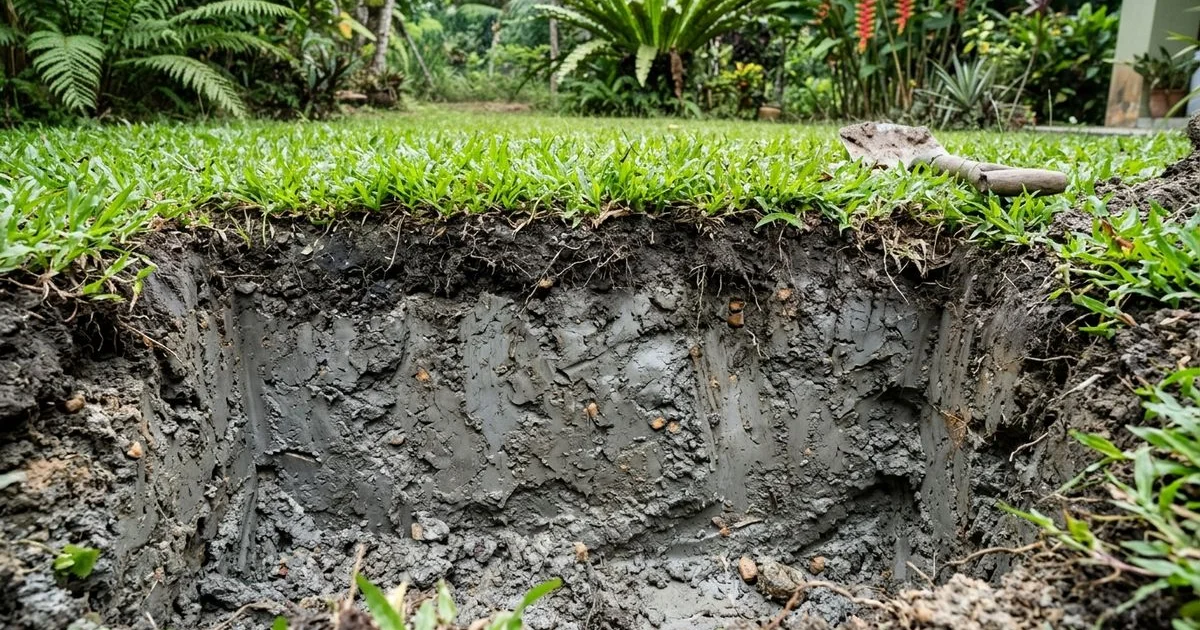
Whatever else is going on with a PJ lawn, one fact sits underneath it: Selangor clay. Most residential soil across the Klang Valley is heavy clay, fertile in its way, but made of particles so fine they pack together like wet flour. That packing is compaction, and it’s the quiet cause behind half the struggling lawns our aeration service gets called to.
Why Clay Compacts So Easily
Sandy soil is marbles in a jar, squeeze it and air gaps remain. Clay is flour: pressure squeezes the microscopic plate-shaped particles flat against each other until almost no pore space survives. And pressure is everywhere on a lawn, footsteps, kids playing, the car’s wheels overhanging the grass, even the pounding of monsoon rain itself. Each pass squeezes a little more air out, and unlike sand, clay doesn’t spring back.
Builder traffic makes it worse on newer properties: many Klang Valley lawns were laid as turf over ground already crushed dense by construction machinery, which is why some lawns struggle from their first year.
What Compaction Does to Grass
Roots don’t grow through soil so much as through the spaces in soil, the pores that hold air and let water move. Compaction closes them, and the consequences stack up:
- Water stops penetrating. Rain pools on the surface or runs off; the root zone underneath stays oddly dry while puddles drown the crowns above.
- Roots suffocate. They need oxygen like any living tissue. Airless soil keeps them shallow and weak.
- Feed can’t reach. Fertiliser sits in the top centimetre and washes away with the next storm.
- Soil biology shuts down. The microbes that break down thatch and cycle nutrients need air too, compacted soil goes biologically quiet, and thatch piles up unbroken on top.
The visible result: thin, pale grass that pools water after rain, ignores feeding, and browns fast in dry weeks. If that’s your lawn’s biography, check compaction before spending another ringgit on fertiliser.
How Aeration Reverses It
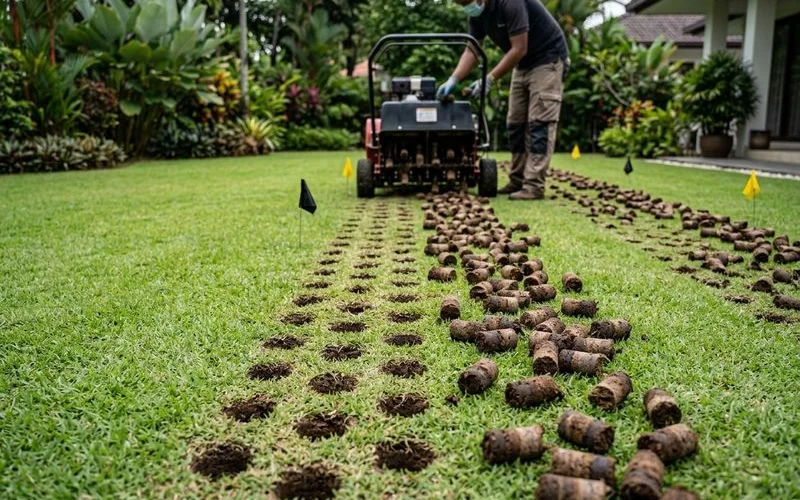
Core aeration drives hollow tines into the lawn and pulls out thousands of finger-sized soil plugs, leaving open channels through the compacted layer. The effect is immediate and physical: rain soaks in through the holes, air follows, and roots grow toward both. The extracted cores break down on the surface within a couple of weeks, returning their soil and reawakening microbial activity along the way.
On lighter compaction, spike aeration, opening channels without removing cores, can be enough. On typical PJ clay, hollow-core is the tool that earns its keep.
One pass a year keeps clay open
Compaction is cumulative, so the fix is rhythmic: one aeration a year, ideally before a growing season, holds the line. Skipping years lets the clay quietly reseal.
Making It Stick: Aftercare
Aeration opens the door; what you send through it determines the lasting benefit. Feeding straight after aeration delivers nutrients to root depth for the first time in years. Better still, top-dressing after aeration works compost or sand into the core holes, permanently improving the clay’s structure a little more with each annual cycle.
Suspect your lawn is sitting on concrete-grade clay? Try the screwdriver test after rain, if it won’t push in, the soil’s answer is no. Send us the result on WhatsApp and we’ll quote an aeration visit, free.