
The Step That Makes Aeration Permanent
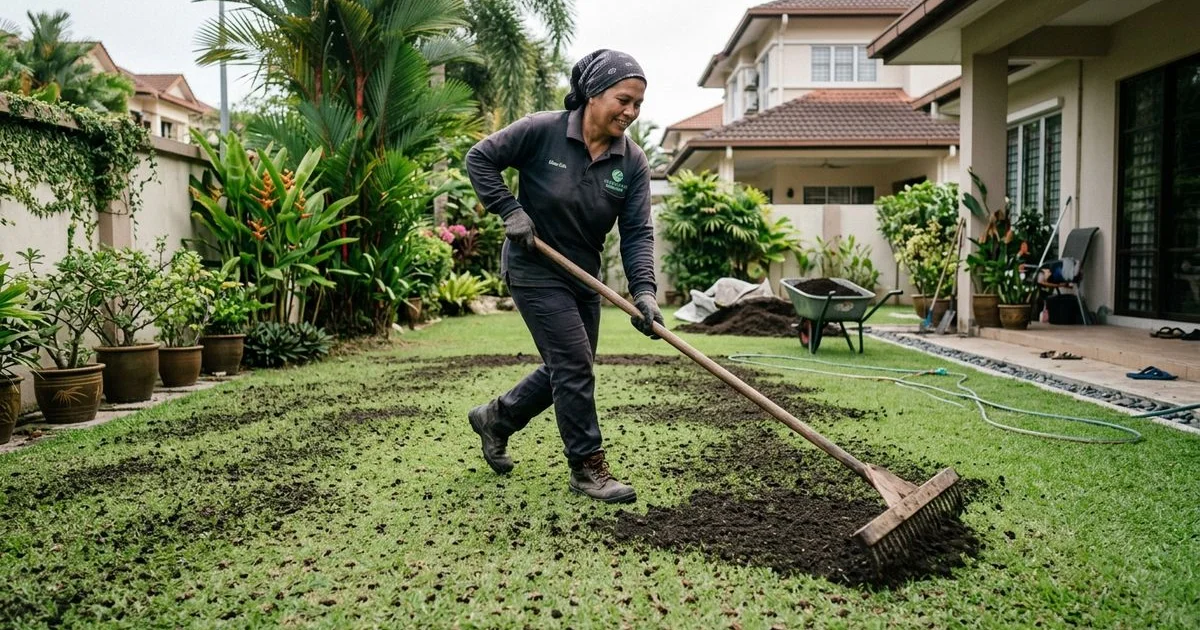
Aeration punches thousands of holes through compacted clay, and then, left alone, Selangor clay slowly squeezes them shut again. Top-dressing is the follow-on step that interrupts that cycle: a thin layer of organic material spread across the lawn right after our dethatching and aeration service has opened it up, falling into the core holes and changing what the soil is actually made of.
Do it after each annual aeration and the clay genuinely improves year on year. Skip it and aeration becomes a treatment you repeat; with it, aeration becomes a renovation that compounds.
What Goes in the Mix
Organic compost is the workhorse on clay. It feeds soil microbes, holds nutrients, and physically separates clay particles as it’s worked in, the textbook fix for the dense, airless structure PJ lawns sit on.
Coarse sand is the drainage amendment. Mixed with compost, it props pore spaces open and keeps water moving. (Sand alone on heavy clay is an old myth that can backfire, creating a cement-like mix, it needs the organic fraction with it.)
The usual blend for Klang Valley lawns is compost-forward with a sand fraction, adjusted to the lawn: more sand where pooling is the complaint, more compost where the soil is dead and grey.
How the Job Is Done
- Aerate first. The core holes are the delivery route, top-dressing without aeration only conditions the top centimetre.
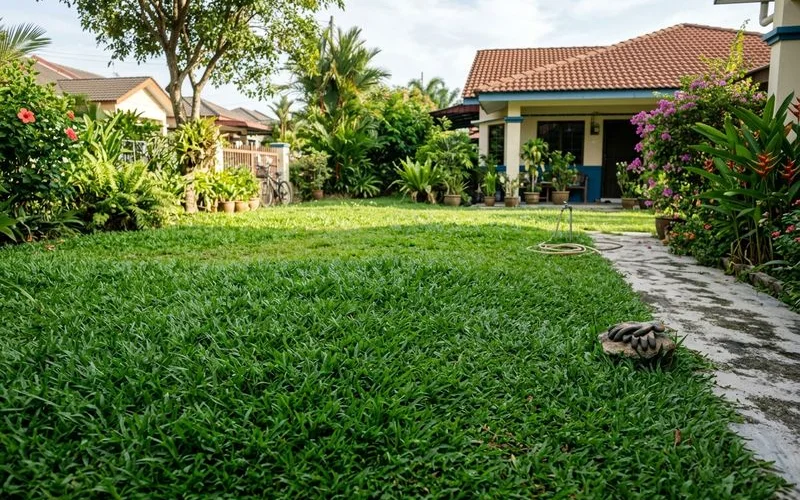
- Spread thin. The mix goes on at roughly half a centimetre to a centimetre, thin enough that grass tips show through everywhere. More is not better; a heavy layer smothers.
- Work it in. Raked or brushed so material settles into the holes and between plants rather than sitting on the leaves.
- Let the lawn finish the job. Over the following weeks the cores break down, the mix integrates, and the surface evens out. Mowing continues as normal once the grass is growing through.
Timing
The ideal slot is right after aeration, ahead of a growing season, the monsoon growth flush then knits everything together fast. Avoid top-dressing a stressed, dormant or disease-active lawn; condition healthy grass, treat sick grass first.
What It Does for Selangor Clay Over Time
The first cycle improves the top few centimetres: better infiltration, easier rooting, visible bounce-back in the grass. (If you’re not sure your lawn is compacted in the first place, our guide to soil compaction in Selangor clay covers the quick checks.) The compounding happens with repetition, each annual aeration-plus-top-dressing pass works organic matter a little deeper, until the lawn sits on a root zone that drains after storms, feeds the microbes that keep thatch in check, and responds properly to fertiliser.
That last point is worth underlining: conditioned soil is what makes feeding efficient. Pairing the soil work with feeding to complete recovery is the full renovation sequence for a tired lawn, open the soil, improve the soil, then feed the grass.
Top-dressing is quoted alongside aeration based on lawn size, and honestly, it’s the best-value add-on we offer on clay. Ask for it when you book your aeration, or WhatsApp us a photo of your lawn and we’ll advise whether your soil needs it this year.