
Why Cutting Height Is the Skill Most Cutters Skip
Anyone can make grass shorter. Cutting it to the height where that species stays dense, green and weed-resistant is the part that separates lawn care specialists in Petaling Jaya from a quick chop. Each Malaysian grass type has a comfortable height range, cut within it and the lawn thrives; cut below it and you scalp the grass, exposing soil and stressing the roots.
Here are the numbers we work to, species by species.
Cow Grass (Axonopus compressus): 25-50mm
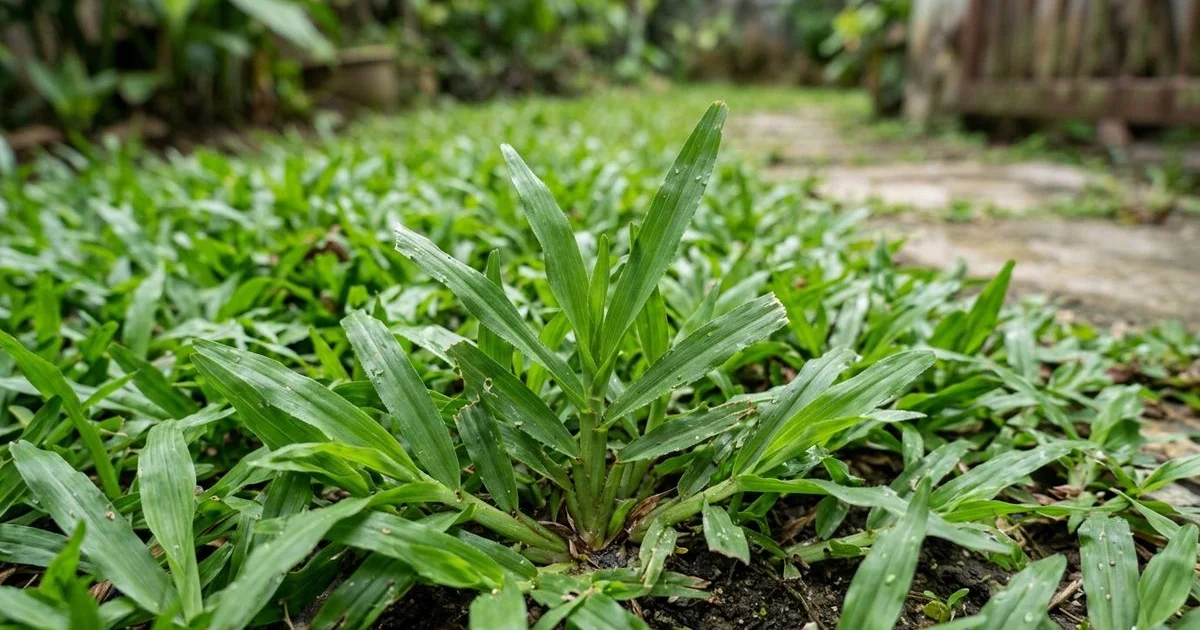
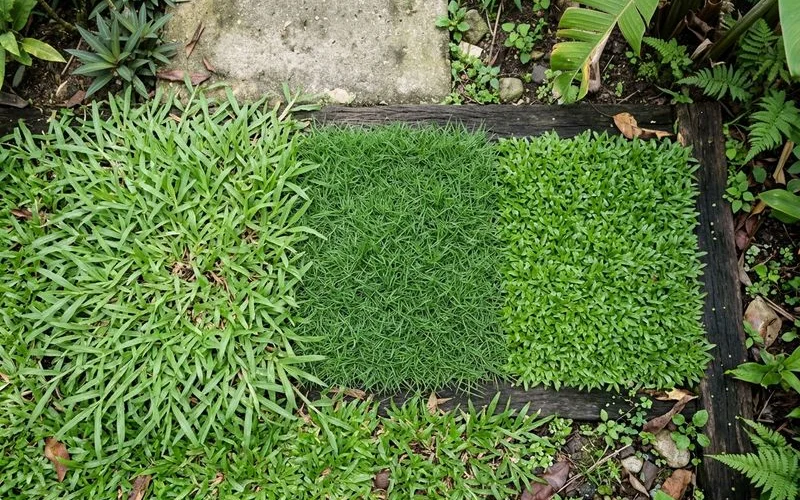
Cow grass is the default Malaysian lawn, broad, rounded blades, spreads by runners, nearly indestructible. It looks best kept around 25 to 50mm. Cut lower than about 25mm and you start slicing into the stolons (the runners it spreads by), which browns the lawn and slows regrowth. In full sun it can take the shorter end of the range; in shade, leave it longer so each blade catches more light.
Carpet Grass: 20-40mm
Carpet grass is finer than cow grass and tolerates slightly shorter cutting, around 20 to 40mm. It rewards consistency: kept at a steady height on a regular cycle it forms the smooth, even surface people picture when they say “carpet.” Let it overgrow and then cut it back hard, though, and it browns more visibly than cow grass.
Pearl Grass: 15-30mm
Pearl grass is the premium, fine-textured option on newer landscaped gardens. It naturally grows low and dense, and suits 15 to 30mm, but it’s the least forgiving of the three. Scalp pearl grass and the recovery is slow and patchy, which is why it should only be cut with a well-adjusted mower and a careful hand.
The one-third rule applies at every height
Whatever your target height, never remove more than a third of the blade in one cut. If the lawn has overgrown, bring it down in stages over two or three visits rather than one drastic chop.
Quick Reference Table
| Grass type | Ideal height | Scalping risk below | Notes |
|---|---|---|---|
| Cow grass | 25-50mm | ~25mm | Hardy; leave longer in shade |
| Carpet grass | 20-40mm | ~20mm | Best on a steady cycle |
| Pearl grass | 15-30mm | ~15mm | Premium look, least forgiving |
What Scalping Actually Does to a Lawn
Scalping is cutting so low that you expose stems, runners and soil. The grass loses most of its leaf area at once, so it can’t photosynthesise properly and burns stored energy to regrow. While it recovers, the exposed soil heats up, dries out, and gives goosegrass and broadleaf weeds the open ground they need. One scalping is a setback; repeated scalping is how good lawns become thin, weedy ones.
Uneven ground makes scalping worse, the mower rides high on humps and shaves the dips. That’s a mower-handling skill issue, and it’s why an experienced crew with a properly set machine gets an even finish that a casual cutter can’t.
Height Is Half the Picture
The right cutting height keeps grass healthy; the right schedule keeps it at that height. The two work together, see our guide on how often to mow for the seasonal cycle that pairs with these numbers. And because dense grass at the correct height is also your best weed defence, a lawn that’s still thin after height and schedule are fixed usually needs feeding, that’s where you can keep your grass dense with feeding.
If you’re not sure what’s growing on your lawn, send us a close-up photo on WhatsApp. Identifying Malaysian grass types is day-one knowledge for our crew, and we’ll tell you the species, the height, and the cycle in one reply.