

The Short Answer: Fortnightly for Most Malaysian Lawns
If you only want one number, here it is: cut every two weeks during the growing season. Fortnightly mowing keeps the common Malaysian lawn grasses at a healthy height, prevents the scalping that comes from cutting overgrown grass back hard, and keeps your garden tidy enough that you never think about it. That schedule comes straight from the lawn mowing routine we run across Petaling Jaya for 150+ recurring clients.
But “every two weeks” is the average, not the law. The right frequency for your lawn depends on three things: the season, your grass type, and how much sun the lawn gets. Get those right and your mowing schedule almost sets itself.
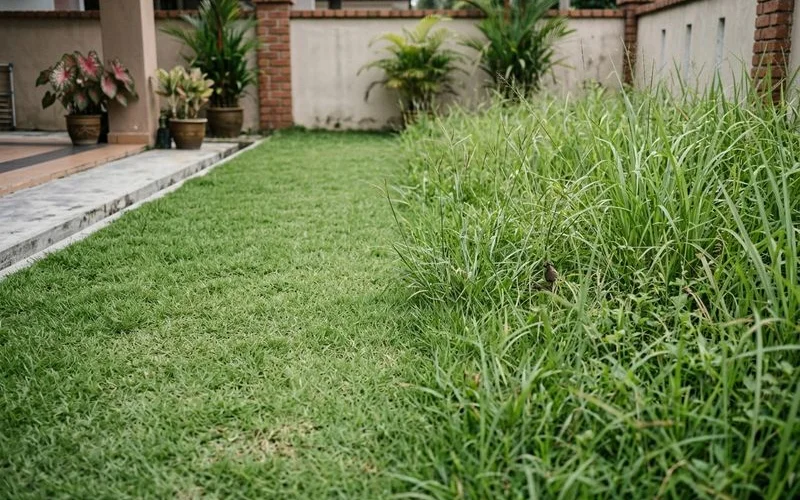
The one-third rule
Never remove more than a third of the grass blade in a single cut. It’s the most reliable rule in lawn care: cut more than that and the grass diverts energy from roots to emergency regrowth, thinning the lawn over time.
How the Monsoon Changes Your Schedule
Selangor has two wet seasons, roughly March to May and September to November, and they’re when your lawn does most of its growing. Warm soil plus near-daily rain can double growth speed, which is why a lawn that looked fine on a monthly cut in February becomes a problem by October.
| Season | Growth speed | Recommended cycle |
|---|---|---|
| Wet seasons (Mar-May, Sep-Nov) | Fast to very fast | Fortnightly, weekly for sunny open lawns |
| Inter-monsoon months | Moderate | Fortnightly |
| Drier stretches (Dec-Feb) | Slow | Fortnightly to monthly |
Open, sun-exposed lawns sit at the fast end of every row in that table. Heavily shaded gardens grow slower but stay damp longer, which brings its own issues, fungus prefers long, wet grass, so even shaded lawns shouldn’t be left to grow out in the monsoon.
Grass Type Matters More Than People Think
Most Klang Valley lawns are cow grass (Axonopus compressus) or carpet grass, with pearl grass on newer, more manicured gardens. Cow grass is the workhorse: it grows fast, spreads by runners, and tolerates rough treatment, but it shows untidiness quickly. Carpet grass is slightly slower and finer. Pearl grass grows lower and slower but is the least forgiving of scalping.
The grass type also sets how short you can cut, getting that wrong undoes a good schedule. We’ve covered the species-by-species numbers in our guide to the right mowing height for your grass.
Why Irregular Mowing Causes Most Lawn Problems
The damage we’re called to repair rarely comes from mowing too often. It comes from the gap-then-chop pattern: six weeks of growth, then one brutal cut back to ground level. That single session breaks the one-third rule several times over. The lawn responds by browning, thinning, and opening gaps that weeds and pests move into. A few cycles of that and a once-good lawn looks permanently tired.
A regular schedule removes the guesswork, and on a recurring plan, it removes the effort too. The same crew arrives on a fixed cycle, adjusts the frequency with the seasons, and spots problems like grubs or fungus while they’re still small.
Setting Your Own Schedule
If you mow your own lawn, anchor the routine to the calendar, not to how the grass looks, by the time it looks long, you’re already late. Fortnightly through the year, moving to weekly if your lawn is open and sunny during peak monsoon, and stretching toward monthly in the dry months, will keep almost any PJ lawn healthy.
And if you’d rather not think about it at all, that’s exactly what we’re for. You can set up a recurring mowing plan with a free quote by phone or WhatsApp, we’ll recommend the right cycle for your grass and adjust it through the year so you never have to.